 Comics are seen as a low art, having established as a form in the late 19th and early 20th century. Whilst preceding works have are seen as sharing certain techniques, most notably the conveying of a narrative through imagery, most commentators are agreed that the form was established in the the humorous cartoons and comic strips found in newspapers and magazines of the late 19th and early 20th century, and was fuelled by the boom in publishing technology. Early precursors include Trajan's Column and the Bayeaux Tapestry, as well as works by William Hogarth, Rodolphe Töpffer, Wilhelm Busch and George Cruikshank. Discussion of the form is even more recent, especially in the United States; although early criticism can be traced back to the 1920s, it is only in the latter half of the 20th century that serious examination of the form was begun. Definitions of the form are rather loose in their approach; some claim its printed format is crucial, some emphasize the interdependence of image and text, and others the sequential nature of the images.
Friday, December 7, 2007
Image Essay #10
Comics are seen as a low art, having established as a form in the late 19th and early 20th century. Whilst preceding works have are seen as sharing certain techniques, most notably the conveying of a narrative through imagery, most commentators are agreed that the form was established in the the humorous cartoons and comic strips found in newspapers and magazines of the late 19th and early 20th century, and was fuelled by the boom in publishing technology. Early precursors include Trajan's Column and the Bayeaux Tapestry, as well as works by William Hogarth, Rodolphe Töpffer, Wilhelm Busch and George Cruikshank. Discussion of the form is even more recent, especially in the United States; although early criticism can be traced back to the 1920s, it is only in the latter half of the 20th century that serious examination of the form was begun. Definitions of the form are rather loose in their approach; some claim its printed format is crucial, some emphasize the interdependence of image and text, and others the sequential nature of the images.
Image Essay #9

Drawing is a visual art which makes use of any number of drawing instruments to mark a two-dimensional medium. Common instruments include graphite pencils, pen and ink, inked brushes, wax color pencils, crayons, charcoals, chalk, pastels, markers, stylus, or various metals like silverpoint. An artist who practices or works in drawing may be referred to as a draftsman or draughtsman.
A small amount of material is released onto the two dimensional medium which leaves a visible mark - the process is similar to that of painting. The most common support for drawing is paper, although other materials such as cardboard, plastic, leather, canvas and board, may be used. Temporary drawings may be made on a blackboard or whiteboard, or indeed almost anything. The medium has also become popular as a means of public expression via graffiti art, because of the easy availability of permanent markers.
Drawing is a form of visual expression and is one of the major forms within the visual arts. There are a number of subcategories of drawing, including cartooning, and certain drawing methods or approaches, such as "doodling," may or may not be considered as part of "drawing" as a "fine art."
In simplistic terms, drawing is distinct from painting, perhaps more so in the Western view; East Asian art, which generally only uses brushes, has historically made less distinction between the two. Critics may praise a painter's ability to draw well, meaning that the shapes, especially of the human body, are well-articulated, or a drawing may be considered painterly.
Image Essay #8
 A collage (From the French: coller, to glue) is a work of art, primarily in the visual arts, made from an assemblage of different forms, thus creating a new whole. Use of this technique made its dramatic appearance among oil paintings in the early 20th century as an art form of groundbreaking novelty.
An artistic collage work may include newspaper clippings, ribbons, bits of colored or hand-made papers, portions of other artwork, photographs, and such, glued to a piece of paper or canvas. Techniques of collage were first used at the time of the invention of paper in China around 200 BC. The use of collage, however, remained very limited until the 10th century in Japan, when calligraphers began to apply glued paper, using texts on surfaces, when writing their poems.The technique of collage appeared in medieval Europe during the 13th century. Gold leaf panels started to be applied in Gothic cathedrals around the 15th and 16th centuries. Gemstones and other precious metals were applied to religious images, icons, and also, to coats of arms.
In the 19th century, collage methods also were used among hobbyists for memorabilia.
Artist Essay: Pepon Osorio

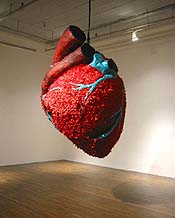


The artist i viewed for the Art:21 was Pepon Osorio. He was a contemporary artist, who made live scenes as his art. He was Puerto Rican and had and African Descent. At one point of his life, Pepon Osorio was a social worker. His artwork was very family oriented. His pieces that he showed was everyday living environments mixed in a history of a family. A large part of his work is his Latino heritage. The recent piece was a homage to his father. It featured a barbershop where his father used to work. He was afraid of getting his hair cut and had been terrified there after since. It is called “scene of a crime” it is supposed to be sacred. It had a lot of caution tape, broken glass, and broken dreams. There were many family pictures presented around the various rooms. The pictures told stories of his happy childhood and what the outcome was later in his life.
Overall I enjoyed this artist because he step outside the box and was not something you saw every day, something you could interact with, and you could get the full effect.
Overall I enjoyed this artist because he step outside the box and was not something you saw every day, something you could interact with, and you could get the full effect.
Image Essay #7
 The art I have chosen is a dimensional mind trip. The color contrasts seem to fit well with the side walk color since every detail around the drawer has to be taken into effect. I like the colors because it gives in a space like feel. The visual arts are art forms that focus on the creation of works which are primarily visual in nature, such as painting, photography, printmaking, and filmmaking. Those that involve three-dimensional objects, such as sculpture and architecture, are called plastic arts. Many artistic disciplines (performing arts, language arts, and culinary arts) involve aspects of the visual arts as well as other types, so these definitions are not strict. The current usage of the term "visual arts" includes fine arts as well as crafts, but this was not always the case. Before the Arts and Crafts movement in Britain and elsewhere at the turn of the 20th century, "visual artist" referred to a person working in the fine arts (such as painting, sculpture, or printmaking) and not the handicraft, craft, or applied art disciplines. Overall, this was a good picture.
Artist Essay: Sally Mann
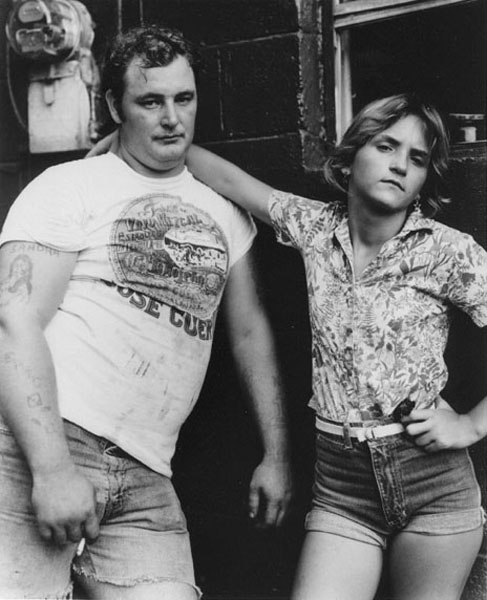

The artist that I viewed while watching Art: 21 was Sally Mann. Sally Mann is a photographer who has done a lot of her work in southern states such as Alabama, Mississippi, Virginia, and Georgia. She has done many landscapes, but also uses random  objects and her children in her work. When she was growing up, she was known as the "wild child" for being carefree. She was the one who valued history and learned from it. She respected where she came fro
 m. Her art was intended on being odd and a little weird, but she liked it that way. She enjoyed photographing her kids in the nude. The pictures were seen as innocent and just something that any normal kids would do. She got a lot of negative feedback for her photo decisions because of photographing nude children. She had no "sick" intention with her ideas, she just used her kids because they were present.
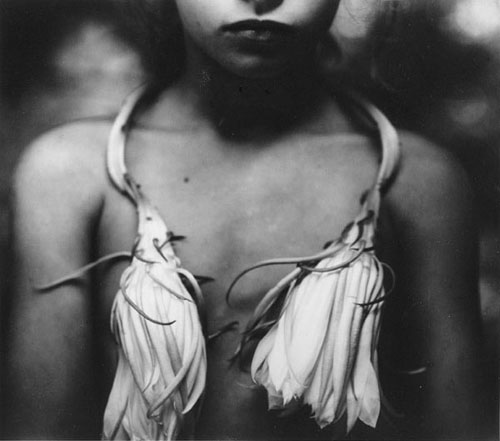 objects and her children in her work. When she was growing up, she was known as the "wild child" for being carefree. She was the one who valued history and learned from it. She respected where she came fro
 m. Her art was intended on being odd and a little weird, but she liked it that way. She enjoyed photographing her kids in the nude. The pictures were seen as innocent and just something that any normal kids would do. She got a lot of negative feedback for her photo decisions because of photographing nude children. She had no "sick" intention with her ideas, she just used her kids because they were present.
 I liked the idea of Sally Mann's art, even though she was a nut, but an artist as well. She basically did what any artist did by pushing the buttons of society and making an audience question her own personal ideas.
Blog #4

For the "history of art," I chose a piece by Claude Monet titled "San Giorgio Maggiore by Twilight." The colors in this piece are bright, but soft at the same time. For his time, Monet was and is still considered one of the greatest impressionistic artists of all time. He had a new use of color with vibrance that spread all over his canvas, but did it enough that it wasn't overpowering. It is obviously an impressionistic piece, but the contrast between colors makes it stand out a lot more than any other piece I have seen. Most of Monet's other pieces are a more soft and easy to look at. This piece has an edgy feel because of its dark colors. There is dominace with the castle on the left hand side, a small building on the right, and a medium reflection underneath the castle. This piece does not feature a human form. I have been encouraged, after this piece to experiment with more styles that I haven't tried before.
The next piece that could s how Visual Culture could be Andy Warhol's rendition of Marilyn Monroe. He used many bright colors for each piece he did of this particular picture. He is a founding artist of the
  term "pop art" which his art was focused on pop culture during his life. This work is very well known, as well as most of his pieces, but people connect with this one because of it being Marilyn Monroe. The Marilyn print takes up the whole canvas to be the focal point. Because it is a photo print the human proportions are mostly accurate. I am a big Monroe fan, therefore I am automatically drawn to the piece. I have been influenced to do art with pop culture because it is one of my main interests.
 how Visual Culture could be Andy Warhol's rendition of Marilyn Monroe. He used many bright colors for each piece he did of this particular picture. He is a founding artist of the
 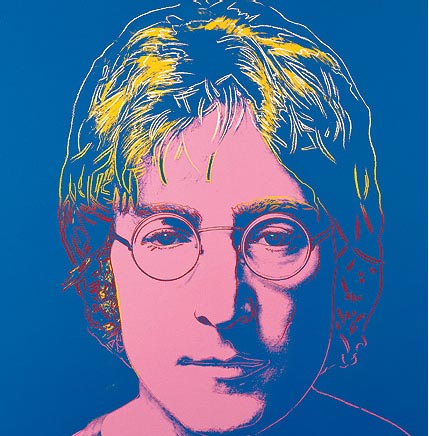 term "pop art" which his art was focused on pop culture during his life. This work is very well known, as well as most of his pieces, but people connect with this one because of it being Marilyn Monroe. The Marilyn print takes up the whole canvas to be the focal point. Because it is a photo print the human proportions are mostly accurate. I am a big Monroe fan, therefore I am automatically drawn to the piece. I have been influenced to do art with pop culture because it is one of my main interests.
 This piece is for Fashion Design. The colors used for this piece were basically used to plan out what the clothing would look like, in general, if it was finished. Cool colors are used for this piece. There is shading with the colored pencil to show the effect of the clothing. The form is taking up most of the page to get the full effect. The human form is proportionate because it is used to accurately display clothing. I haven't really been influenced by this piece, but it does make me want to try new things.
Subscribe to:
Posts (Atom)